
Different sites, inspected by different contractors, for different types of systems on different schedules in different reporting formats.
Because of this complexity, compliance gaps can begin to form and often without people noticing.
Anchor points are...
Anchor points are an integral part of a fall arrest system. They are the secure attachment point that connects fall protection equipment, such as a harnesses or lifelines, to a structure or building. These are a requirement when either working at height or when in a fall arrest situation. The anchor must guarantee it can take the resistance required to stop a fall.
There are many types of anchor points, each offering a different solution to different circumstances.
These include:

Fixed anchors
These anchors are permanently attached to a structure and allow protection equipment to be to be anchored in buildings, structures and areas that are frequently accessed.

Horizontal Lines
Horizontal lines are either a flexible or rigid rails that lets worker move across a horizontal surface such as a roof. They either prevent a worker from getting too close to a risk area or stop a fall if a accident does occur.

Vertical Lines
These anchor points work in the opposite direction to horizontal lines and allow a worker to go either up or down the height of the system. They are designed to limit lateral movement
For a full description of all the anchor points available, read this article by 3M.
Why Anchor Point Compliance Becomes Difficult at Scale
When you put it on paper, it seems like an easy task, inspecting anchor points.
Inspect at the correct intervals
By a competent person
Record the results
This is because organisations dealing with multiple buildings will:
- Maintain hundreds (or thousands) of anchor points
- Use different inspection providers across regions
- Receive reports in PDFs, spreadsheets, or documents
- Rely on disconnected systems—or no system at all
The result?
A fragmented landscape where:
- Records are stored in different places
- Inspection formats vary by contractor
- Key dates are tracked inconsistently
- Not having a centralised system to track all the inspections
What Compliance Actually Requires
In the regulations, the expectations are clear. To meet the requirements of anchor point inspections to have a safe working environment, you need to:
ID each anchor point
Each anchor point needs to have a unique identifier and not just a name like “roof anchor building a”
Traceable inspection history
You need a clear, chronological record of inspections tied to each individual anchor point.
Person Records
The person completing the inspection must be competent to do so. Each inspection must clearly show who completed it.
Schedule Records
There must be a system that ensures that inspections happen at the correct intervals
Accessible Records
The inspection records need to be accessible quickly and not lost in folders or boxes.


The Real Problem Isn’t Inspection
The biggest issue isn't if the inspections are being completed and it isn't the number of inspections that need to be conducted. It is the lack of visibility and being able to prove they are happening consistently across your entire portfolio.
For most businesses, there is no easy way to answer questions like:
- How many anchor points do we have?
- When was each one last inspected?
- Which ones are overdue right now?
- Where are the records stored?
Instead, to attempt answer these questions, businesses will need to:
- Searching emails
- Opening multiple PDFs
- Checking spreadsheets
- Contacting contractors
Where It Breaks Down for most multi building systems
Even organisations that take compliance and health and safety recording seriously run into the same problems.
No central assets list
Anchor points are not individually recorded and are instead under a generic term for the property.
Inconsistent records
Different sites and inspection teams may complete inspection records differently, especially when training isn't uniform across an entire organisation.
This can result in:
- Different report formats
- Different levels of detail
- Different naming conventions
This makes cross site consistency almost impossible.
Manual Tracking Systems
With different teams at different sites, inspections dates can be tracked using different methods which can include:
Personal calendars
Site controlled spreadsheets
Email reminders
All of these rely on inputs that can be affected by human error, resulting in inconsistencies and even missed inspections.
Limited Real Time Insight
By the time that an issue has been spotted, such as a missed inspection, that is already a compliance failure.


The hidden risk
But across multiple buildings, they compound into a serious risk, especially in an audit or incident scenario.
Book a demo to see how a structured digital inspection system can help you
Why digital inspections are changing multi-site compliance
- Large volumes of safety-critical assets
- Ongoing inspection cycles
- Multi-site portfolios
- Instant access to compliance data
Not because they want new technology but because their existing processes are no longer fit for purpose.
What Digital Changes in Practice
✅ Track every anchor point as an individual asset.
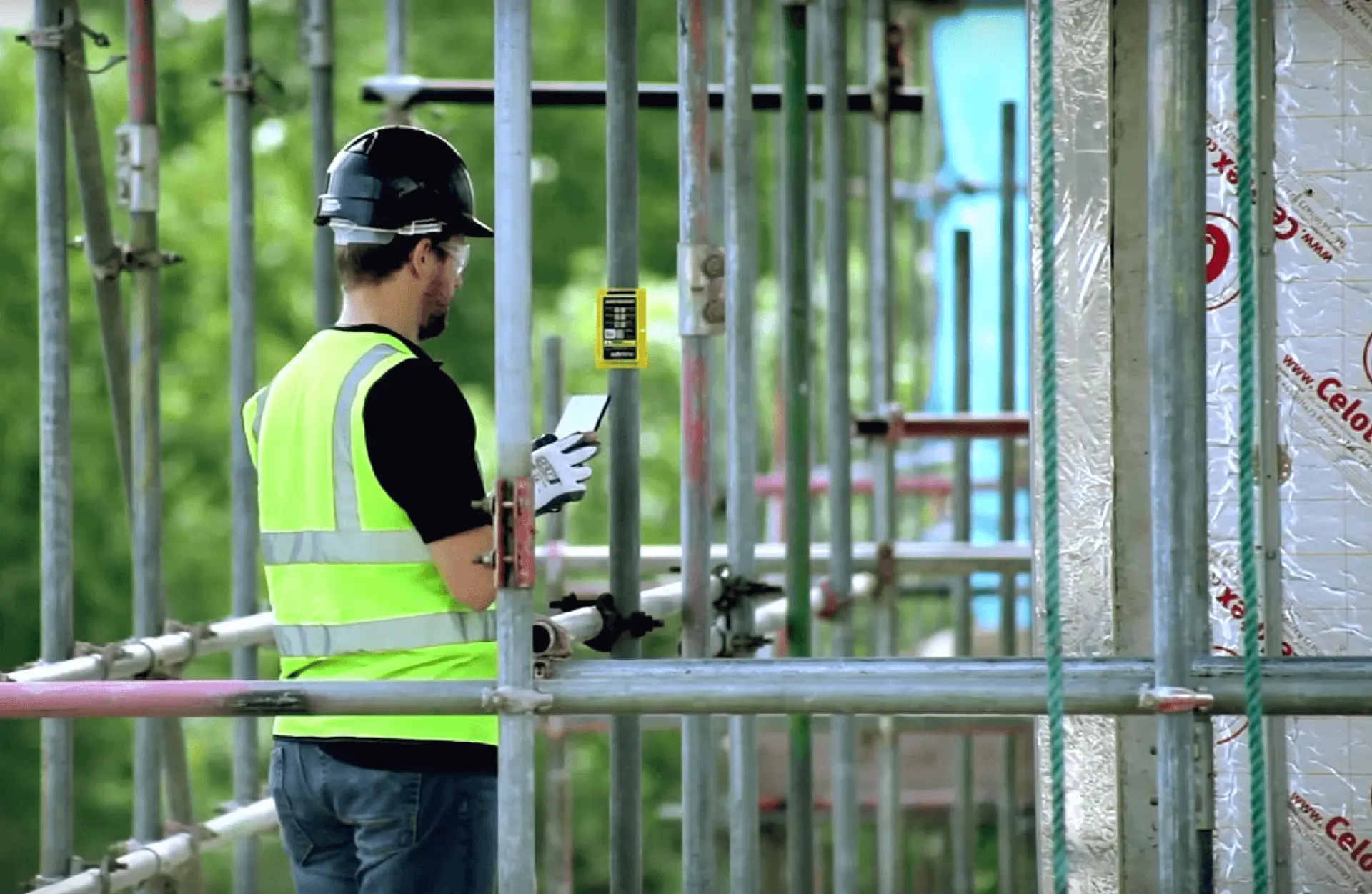
A digital questionnaire can be assigned to every anchor point with an NFC tag that gets scanned to open the inspection on a smartphone. Alternatively, the questionnaire can be tailored to as specific questions about each anchor point so that it's not just as part of a report, but as something with its own identity and history.
✅ Every inspection has the correct data
Each inspection report will automatically populate with:
- Who carried out the inspection
- When it was completed
- The geolocation of where it was completed
This creates accountability and satisfies the requirement for a competent person to carry out and evidence the inspection.
✅ Controlled inspection schedules
Re-inspection dates are tracked automatically, making it easy to:
- Identify overdue anchor points
- Ensure required intervals are met
- Avoid relying on manual reminders
✅ Records are accessible at the point of need
Instead of searching through emails or PDFs, inspection records can be retrieved immediately, from one location, for each site - whether for internal checks, client requests, or audits.
✅ Record inspections in real time
When an inspection is completed, it is recorded immediately in the system, showing what has been inspected and what hasn't, eliminating delays, missed inspections, lost paperwork, and inconsistent reporting.
✅ Access compliance data instantly
Inspection reports are immediately accessible to how require it, from across all buildings, without searching through files or contacting contractors.
✅ Create a complete audit trail
Where every action is logged, traceable, and easy to evidence.
✅ Consistency and Completeness across every inspection
A structured digital system solves recording consistency by enforcing the inspection process across every site.
That means:
Every inspection follows the same format regardless of who carries it out.
Required fields must be completed before an inspection can be submitted, preventing missing data, skipped checks, or incomplete records.
A standardised questionnaire ensure all required steps are followed removing variation between inspectors and contractors
From Reactive to Controlled Compliance
This shift fundamentally changes how compliance is managed. Instead of:
- Chasing reports
- Checking spreadsheets
- Reacting to issues
You move to:
- Real-time visibility
- Structured asset tracking
- Ongoing control across your entire portfolio
Why This Matters More as You Scale
- Maintain consistency across sites
- Standardise processes across contractors and staff
- Keep control, even as complexity increases
Without that structure, growth almost always leads to increased risk.
Take Control of Your Anchor Point Compliance
If you’re managing anchor point inspections across multiple buildings, then visibility and control isn’t optional but essential.
Book a demo to see how a structured digital inspection system can help you:
- Track every anchor point inspection
- Ensure they’re consistent, complete, and audit-ready
- Instantly identify overdue or missed inspections
- Maintain full visibility across all your sites